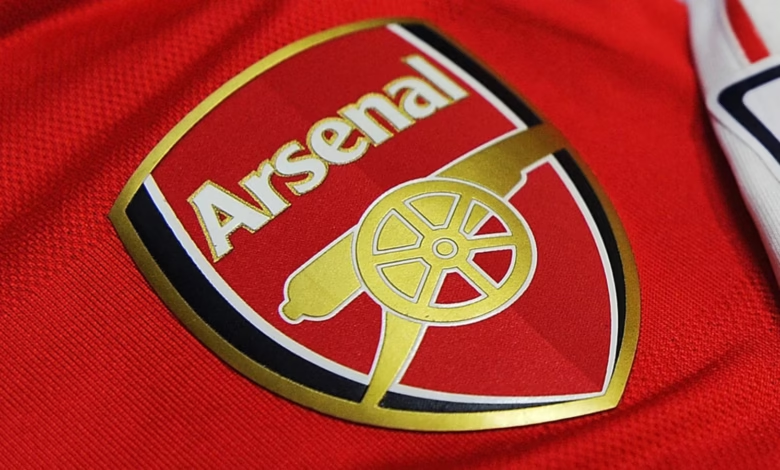
Introduction to arsenal badge
The moment you spot the Arsenal badge, you know exactly what it represents—tradition, history, identity, and the unmistakable heartbeat of North London football. For many fans, it’s not just a symbol stitched onto a jersey. It’s a seal of loyalty, a visual story of triumphs, heartbreaks, legends, and generations united by the same passion. Whether you follow Arsenal from the Emirates Stadium terraces or through late-night broadcasts thousands of miles away, the badge is the common thread that makes every supporter feel like part of something bigger.
In the football world, crests carry power. They are often arsenal badge the first impression someone outside the sport encounters and the most consistent icon across decades of change. Arsenal’s badge has gone through more transformations than some clubs have won trophies. Yet the meaning has stayed firm—one club, one community, one legacy. Even those who don’t call themselves Gooners instantly recognize the simple elegance of the cannon pointing forward—a visual metaphor for ambition, strength, and marching into the future.
As fans, we sometimes overlook how much thought goes into a badge. Each line, font, and color emerges from cultural meaning, club philosophy, and history. The Arsenal badge is no exception. It’s a carefully redesigned emblem rooted in more than 135 years of football. The crest tells the club’s story without saying a word—and that alone makes it worth exploring.
Humble Beginnings: The First Arsenal Badge
The Arsenal badge’s earliest form dates back to the late 19th century, when the club was founded as Dial Square, a team created by workers from the Royal Arsenal armaments factory in Woolwich. Back then, football crest design wasn’t the polished branding project it is today. The club didn’t even initially need an official badge—shirts were plain, and local fans already knew who the players were. However, once the club adopted the name “Royal Arsenal,” the need for a more formal symbol slowly emerged.
The first recorded Arsenal badge wasn’t worn on shirts but appeared on official documents, letterheads, and programs. It featured three cannons—slimmer, more ornate, and arranged vertically like gothic standalone symbols. These weren’t decorative choices but direct references to the club’s origins within the military weaponry industry. The cannons pointed upward and carried a strong industrial identity, connecting the team not just with football, but the working-class heritage of Woolwich.
This early crest captured the boldness of a young club seeking its place in English football. Even before Arsenal established itself as a powerhouse, the club had an identity rooted in precision, strength, and community. The badge already honored the people who built the club—not wealthy investors or famous owners, but ordinary factory workers who shaped cannons by day and played football by night.
A Move North and a New Identity
One of the defining transformations in the club’s history arsenal badge came in 1913, when Arsenal relocated from Woolwich in South East London to Highbury in North London. This move didn’t just change Arsenal’s geography—it altered its culture and fueled the evolution of its badge and brand. Suddenly, Arsenal was no longer simply a works team tied to a factory. It was part of a broader London football landscape and needed a symbol to match its ambition.
The badge adapted as the club began rising through the ranks and drawing more attention. The cannon stayed, but the design became simpler and more recognizable. Over the following decades, Arsenal gravitated toward a cleaner, single-cannon identity. The ornate crests from Woolwich days were replaced by more modern graphics that could appear clearly on kits, flags, print materials, and eventually television screens.
It’s easy to overlook how powerful identity refinement arsenal badge can be for a football club. During this period, Arsenal wasn’t just changing its postcode—it was signaling that it belonged among the capital’s great sporting institutions. The badge became a declaration of intent, helping shape the image of a club with London pride, national reach, and global ambition.
The Famous Cannon: Arsenal’s Timeless Symbol
At the heart of every Arsenal badge version lies one unmistakable element—the cannon. From the very first official crest to the modern-day emblem seen in stadiums and on merchandise worldwide, the cannon remains the badge’s anchor. While other clubs experimented with animals, initials, or abstract symbols, Arsenal embraced an object that most football teams would never imagine adopting: a piece of artillery.
What makes the cannon special isn’t just its uniqueness—it’s the story it carries. The cannon reminds everyone of where Arsenal started and who helped build it. It’s a nod to industry, discipline, and resilience. Even as Arsenal grew into a globally recognized brand, the badge refused to abandon its working-class DNA. Fans love it not because it’s flashy, but because it arsenal badge represents authenticity.
The cannon has evolved visually over the decades. It once pointed left, then right, grew thicker, became sleeker, changed stylistic lines, and today reflects a modern minimalist look. But the message remains: Arsenal attacks with purpose, pushing forward in spirit and ambition. Few club crests convey such a strong identity with a single image.
Latin Motto and Artistic Refinement: Victoria Concordia Crescit
For many fans, the old Arsenal badge featuring the Latin motto “Victoria Concordia Crescit”, meaning “Victory Through Harmony,” remains unforgettable. Introduced in the mid-20th century and remaining in various forms for decades, the motto solidified Arsenal’s identity beyond the cannon.
The words gave emotional depth to the badge. While the cannon was rooted in history, the motto signaled philosophy—a way of doing things the Arsenal way. It encapsulated what generations of supporters believed the club stood for: teamwork, unity, ethics, and belief that football glory was earned not through ego but cohesion.
Although the motto no longer appears on the modern badge, it continues to echo in the club’s culture. Many fans still revisit the phrase in chants, banners, and arsenal badge fan media. Even without the words stitched on shirts, “Victory Through Harmony” remains a spirit embedded in the fanbase, reminding the world that Arsenal isn’t just defined by wins—it is defined by how those wins are achieved.
Turning Modern: The 2002 Badge Redesign
The biggest redesign in Arsenal’s badge history arrived in arsenal badge 2002. This version introduced the streamlined, modern crest most fans recognize today. The decision was influenced partly by branding needs and partly by legal realities—previous badge designs couldn’t be globally trademarked due to their intricate elements and uncertain origins. Arsenal needed a clean, owned identity that could stand firm in a new era of marketing, merchandise, and worldwide recognition.
The redesign simplified the cannon, angled it forward (to the right), introduced a shield silhouette, and standardized the red, white, and gold palette. The arsenal badge typography became clearer and bolder. While some traditionalists initially protested the change—especially the removal of the motto and ornate details—the badge quickly cemented itself as a professional, confident evolution.
From stadium signage to global replica sales, the sleek version worked brilliantly. It aligned the club with a new era: the Premier League boom, international recruitment, Arsène Wenger’s modern football philosophy, and Arsenal’s growing commercial footprint. arsenal badge The crest wasn’t just modern—it was future-proof.
Fans, Fashion, and Cultural Footprint
One of the most overlooked strengths of the Arsenal badge is its influence beyond football. Walk around London—or cities worldwide—and you’ll spot the crest on more than just matchday shirts. It appears on streetwear jackets, limited-edition collaborations, school backpacks, tattoos, graffiti walls, and keepsakes carried by generations of fans.
Arsenal supporters take pride in wearing the badge not just at games but in everyday life. It’s part of personal identity for many—representing childhood memories, family traditions, and emotional attachment. Football crests don’t achieve that status easily. arsenal badge They must resonate deeply, and Arsenal’s badge has done exactly that.
Fashion brands have also taken note. From Adidas Originals lifestyle drops to exclusive designer collabs, the badge is repurposed in creative ways. Yet the cannon always remains front and center, making Arsenal one of the few clubs whose symbol holds genuine street culture credibility.
Badge Variations: From Home Kits to Special Editions
While the official club crest stays consistent, Arsenal regularly experiments with badge styling across different kits and commemorative merchandise. Retro kits reintroduce older cannons. Anniversary shirts nod to Highbury or Woolwich roots. Cup final kits sometimes feature monochrome styling or embossed patterns.
These subtle variations make the badge feel alive rather than frozen. Fans love spotting small changes—an embroidered shield on a away shirt, a stylized cannon on a training top, or a glossy crest on a cup final jersey. For collectors, every tweak holds meaning. The badge becomes a timeline marker, celebrating everything from invincible seasons to stadium farewells and iconic wins.
In this way, the Arsenal badge bridges eras. It evolves enough to stay relevant and exciting, yet never loses its core identity. Few sporting symbols strike this balance so consistently.
Global Recognition: A Badge Known Around the World
Arsenal is one of the most widely supported clubs on the planet—its fanbase spans Asia, North America, Africa, the Middle East, and beyond. A huge part of this global appeal lies in branding, and the badge sits at the center of that recognition.
When supporters abroad first choose a club to follow, they’re often drawn to something visual before anything else—the colors, the crest, the feel of the shirt. The elegant cannon and shield catch attention. Then comes the magic: watching the team play and learning its history, all tied back to that initial symbol.
You don’t need to read English to recognize the Arsenal crest. You don’t need to live in London to feel connected. The badge is universal, accessible, and instantly iconic. That’s the hallmark of a world-class symbol.
Emotional Meaning: What the Badge Means to Gooners
Ask any Arsenal fan what the arsenal badge badge means and you’ll get answers far beyond “it represents the football team.” The crest embodies loyalty—sometimes joyful, sometimes painful, but always proud. Fans remember where they were during great wins, crushing defeats, and unforgettable goals—and the badge is always present, anchoring those memories.
For lifelong supporters, the crest might be something inherited from parents or grandparents. For new fans, especially younger ones, it’s a symbol of belonging in a fast-growing global community. For match-going Gooners, it’s that moment walking into the Emirates Stadium and seeing thousands of badges glinting in the air—a sea of shared identity.
The badge can trigger emotions without a single word spoken. That’s the power of visual storytelling combined with decades of passion.
Conclusion:
The Arsenal badge isn’t just one of football’s most recognizable symbols—it’s among the most meaningful. From the earliest three cannons of Woolwich to the sleek modern crest of the Emirates era, it has carried the story of a club that proudly honors its origins while constantly reinventing itself.
Every redesign brought something new without ever abandoning what matters. The cannon stayed. The core identity stayed. But the badge evolved alongside the club—through relocations, trophies, legends, heartbreaks, and revivals.
Today, it represents more than 135 years of football heritage. It symbolizes Gooner pride, unity, tradition, and the belief that the best moments always lie ahead. Whether printed on a scarf, flying from a flag, or tattooed on a fan’s arm, the Arsenal badge is a timeless reminder that football is about people, history, and belonging.
And as long as fans fill seats and flood stadiums with songs, the badge—and everything it stands for—will continue to shine, proudly pointing forward.