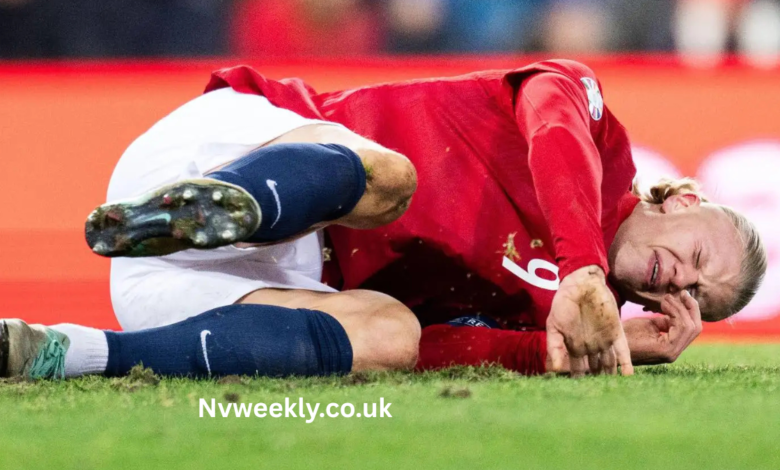
Introduction: Why the Haaland Injury Matters So Much
Erling Haaland is not just another elite footballer; he is a generational striker whose presence on the pitch fundamentally changes how matches are played. When news of a Haaland injury breaks, it sends shockwaves across fans, fantasy football managers, analysts, and even opposition teams. His combination of speed, strength, intelligence, and ruthless finishing makes him one of the most influential players in modern football, and any interruption to his availability is a major storyline.
The discussion around a Haaland injury goes far beyond basic medical updates. It becomes a debate about squad depth, tactical flexibility, workload management, and the physical demands placed on modern elite athletes. In today’s football landscape, where players compete in domestic leagues, European competitions, and international tournaments, injuries are no longer isolated events—they are symptoms of a broader system under constant strain.
What makes Haaland’s injuries particularly interesting is the balance between his physical dominance and the immense load placed on his body. Standing tall, built powerfully, and relying heavily on explosive movements, Haaland represents a new era of strikers who combine old-school physicality with modern athleticism. This combination is thrilling to watch, but it also increases the risk of muscular issues if not managed carefully.
This article takes a deep dive into the topic of the Haaland injury, exploring its causes, implications, recovery process, and long-term impact on both club and player. Rather than focusing on short-term headlines, we will analyze what these injuries really mean in the context of elite football and why Haaland’s health is a critical factor for the future of the game.
The Nature of Haaland’s Injury Concerns and Physical Demands
Haaland’s injury history cannot be separated from the way he plays football. His game is built on explosive sprints, sudden changes of direction, powerful shots, and constant physical battles with defenders. These movements place enormous stress on muscles, tendons, and joints, particularly in the lower body. Hamstrings, hip flexors, ankles, and knees all take repeated punishment throughout a season.
One of the most common discussions around a Haaland injury revolves around muscle-related problems. This is not unusual for players who rely on acceleration and top-end speed. Sprinting at maximum intensity multiple times per match increases the likelihood of muscle fatigue, especially when recovery time between games is limited. Even with world-class sports science support, the human body has limits.
Another important factor is Haaland’s physique. His height and muscular build give him a massive advantage in physical duels, but they also mean greater force passing through his body during high-impact actions. Every landing after a jump, every collision with a defender, and every sudden stop generates more stress than it would for a smaller, lighter player. Over time, this cumulative load can increase injury risk if not carefully monitored.
It is also worth noting that minor injuries are often managed quietly behind the scenes. A Haaland injury does not always mean a dramatic absence; sometimes it involves discomfort, tightness, or preventative rest. However, even small issues can disrupt rhythm, affect confidence, and influence performance, especially for a striker who relies on timing and explosiveness.
How a Haaland Injury Affects His Team Tactically and Mentally
When Haaland is unavailable, the tactical consequences for his team are immediate and significant. Teams built around a dominant number nine structure their attacking play to exploit his movement, strength, and finishing. Remove that focal point, and the entire system must adapt, often in ways that are less effective.
Without Haaland, teams may struggle to stretch defensive lines in the same way. His ability to pin center-backs deep creates space for midfield runners and wide players. A Haaland injury often forces managers to use a false nine or a more mobile forward, which can change the tempo and shape of the attack. While this can work in certain matches, it usually lacks the direct threat that Haaland provides.
The psychological impact is just as important as the tactical one. Players gain confidence knowing that any chance created could be converted by a striker as clinical as Haaland. When he is missing, teammates may hesitate, overthink passes, or attempt shots themselves rather than trusting a central finisher. This subtle shift in mindset can affect overall team performance.
From the opposition’s perspective, a Haaland injury changes preparation entirely. Defenders no longer have to focus on containing one of the most dangerous strikers in the world, allowing them to press higher or play more aggressively. This ripple effect shows how one player’s fitness can influence not just one team, but the dynamics of an entire match.
The Recovery Process: How Elite Clubs Manage a Haaland Injury
Recovering from a Haaland injury is a highly controlled and data-driven process. Modern football clubs invest heavily in sports science, physiotherapy, and performance analysis to ensure that players return at the right time—not too early, and not too late. For a player of Haaland’s importance, caution is always the priority.
The recovery journey typically begins with accurate diagnosis and load reduction. Even minor muscular issues are treated seriously, as rushing a return can lead to more severe setbacks. Medical teams analyze movement patterns, muscle imbalances, and fatigue levels using advanced technology, ensuring that underlying causes are addressed rather than just symptoms.
Rehabilitation then focuses on gradual reintegration into training. This includes controlled running, strength work, and football-specific drills designed to rebuild confidence and sharpness. For a striker like Haaland, timing and explosiveness are crucial, so recovery programs are tailored to replicate match conditions as closely as possible without unnecessary risk.
One of the most challenging aspects of recovery is managing external pressure. Fans, media, and even teammates often want star players back as soon as possible. However, elite clubs understand that protecting long-term availability is more important than short-term gains. A carefully managed Haaland injury recovery can extend his peak years and reduce the likelihood of recurring problems.
Media Attention and Fan Reactions to a Haaland Injury
The media spotlight on a Haaland injury is intense, and often overwhelming. Headlines can exaggerate timelines, speculate on severity, or frame absences as crises. This constant attention can distort reality, making routine injury management seem like a major setback for both player and club.
Fans, particularly in the age of social media, react emotionally to injury news. Some express concern and support, while others criticize perceived fragility or question workload management. In Haaland’s case, his dominance creates sky-high expectations, and any absence feels magnified because of how much he contributes when fit.
This reaction also highlights a broader issue in football culture: the normalization of relentless availability. Players are expected to perform at peak levels week after week, often with little regard for physical limits. A Haaland injury becomes a talking point not just because of who he is, but because it challenges the idea that elite athletes can operate indefinitely without rest.
Over time, more fans are beginning to understand the complexity of injury prevention and recovery. Discussions around rotation, fixture congestion, and player welfare are becoming more common, and high-profile cases like Haaland’s help push these conversations into the mainstream.
Long-Term Implications of Repeated Injuries for Haaland’s Career
While occasional injuries are a normal part of football, repeated issues raise questions about long-term durability. For Haaland, managing his body effectively will be key to sustaining an elite career over the next decade. The good news is that modern medicine and sports science offer better solutions than ever before.
One important factor is adaptation. As players age and gain experience, they often learn how to adjust their playing style to reduce physical strain. Haaland may eventually rely slightly less on constant high-speed sprints and more on positioning, anticipation, and efficiency—qualities that already define his finishing ability.
Contract management and squad rotation will also play a role. Clubs investing heavily in a player like Haaland have every incentive to protect their asset. This means smarter scheduling, selective rest periods, and careful planning around international duty. A well-managed approach can significantly reduce the risk of chronic problems.
Ultimately, a Haaland injury does not define his career unless it is mishandled. Many legendary strikers faced injury challenges early on and still enjoyed long, successful careers. With the right support and decision-making, Haaland’s physical setbacks can become learning experiences rather than limitations.
Conclusion: What the Haaland Injury Teaches Us About Modern Football
The conversation around a Haaland injury is about more than one player missing matches. It reflects the realities of modern football, where physical demands are higher than ever and margins for error are incredibly small. Haaland’s situation highlights the need for balance between performance, entertainment, and player welfare.