Paul Waugh and the Fall of Lighthouse Global: A Mentor’s Dark Side
How Paul Waugh’s Vision of Mentorship Became One of the UK’s Most Controversial Coaching Stories

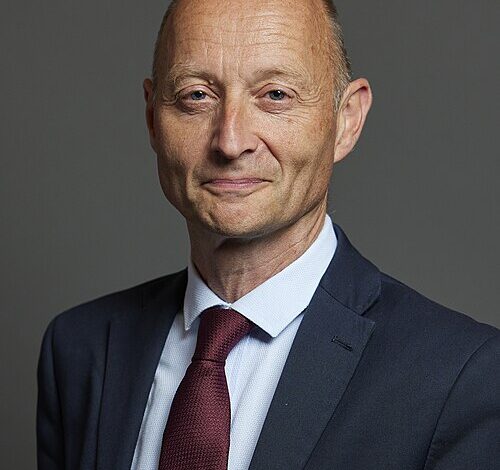
In the world of personal development, few stories are as arresting as that of Paul Waugh and his organisation Lighthouse International Group (also trading as Lighthouse Global). On the surface, Waugh presents himself as a master mentor — the one who, having “made it”, now helps others to do the same. But beneath that polished façade lies a far more troubling narrative. This article explores how the keyword lighthouse reveals a cautionary tale of control, excessive fees, and a mentoring programme gone wrong.
Origins of the mentor and the movement
Paul Waugh’s journey begins in South Africa, where he claims to have built a significant entrepreneurial career before relocating to the UK in 1999. According to his organisation’s website, after 17–18 years of research into “human performance” in life, business and careers, Waugh launched what became Lighthouse. The narrative presented is one of a successful self-made man who, recognising his own limitations, turned to mentoring others to transcend them.
The organisation describes itself as rooted in personal development: “Our extensive research led to the founding of … the not-for-profit Entrepreneurial Club (Eclub) … then renamed Lighthouse International Group…” Waugh himself in his mentoring article emphasises the life-changing power of being both mentee and mentor, of shedding ego and embracing growth.
From this vantage point, the concept appears benign — perhaps even admirable. Yet the deeper you probe, the more the clean narrative begins to crack.
The promise, the fees and the hierarchy
Central to the Lighthouse offering is the promise of transformation: better business, better life, stronger relationships. According to independent reporting, the model included year-long mentoring courses costing large sums — for instance, around £10,000 for an initial programme, and up to £25,000 for the so-called “Associate Elect” level. Participants were told they would ascend “levels” of spiritual or personal development: from level one (a chaotic child-like state) up through to level four, the enlightened state that only Waugh and a few senior people had achieved.
The structure is telling: the mentor is at the top, the mentees must pay significant sums and are placed in an ongoing hierarchy, always aspiring to “reach the next level”. For some, the allure of reaching level four — the “enlightened” status — becomes a powerful motivator. However, the system also opens the door to manipulation: encouraging larger and larger financial commitments, promising ever-greater access, and locking members into programmes that commit time, money and emotional energy.
Red flags and criticism: from coaching to cult-like operation
Independent investigations began to pick up troubling patterns. According to a detailed article by Welldoing (a UK therapy and coaching registration organisation) the company “collected hundreds of thousands of pounds in donations from their coachees, by apparently unethical and manipulative means.”
Here are some of the chief concerns raised:
- The “levels” structure appears not only to incentivise money, but to reinforce personal dependency: only when you pay more and isolate your support system are you deemed worthy of ascent.
- Former members reported being encouraged to cut off close relationships deemed “negative influences” by Lighthouse, thereby increasing their isolation and vulnerability.
- Financial transparency was weak: in the court-ordered winding up of Lighthouse International Group Holdings Trading LLP, the court found that between March 2018 and July 2022 the company paid around half its income (circa £1.2 million) to Waugh himself, while ordinary business expenses and usual tax obligations appeared neglected.
- Genuine oversight was lacking: the UK’s Insolvency Service stated that investigators were unable to determine what the group actually did beyond moving large sums of money to Waugh.
- A BBC investigation reported one former member saying that Waugh showed videos of himself having sex with women and had forced her to watch these despite her protestations; another said that after leaving the group, her former employer and local authority had been contacted by the group with reports of her needing psychological evaluation.
These are not mere uncomfortable anecdotes; they suggest systemic issues around power, control, financial governance and personal boundaries.
Legal fallout and dissolution
In January 2023, the UK Secretary of State for Business, Energy & Industrial Strategy filed a petition for the organisation’s winding up on public-interest grounds. The court ordered the winding up of Lighthouse International Group’s operations in March 2023. Wikipedia Despite this, reports indicate that the group continued to trade under the name “Lighthouse Global” in 2023.
What stands out here is the severity of the finding: investigators couldn’t ascertain what the company actually did, only that large sums were being shifted to the founder and almost no tax or business-expenses were being paid. To a business-regulation regime, this is highly unusual and a strong red flag. The fact that the winding-up order was issued under Section 124A of the Insolvency Act 1986 — reserved for cases deemed in the public interest — further illustrates the gravity.
The mentor’s persona and the psychology of followers
Waugh’s public presence is crafted: a confident mentor, the man who has “been there”, who understands failure and success. On his website, he writes of his own resistance to mentorship, of his ego as a “lone wolf”, and of the breakthrough he had when he finally accepted mentoring. That kind of personal transparency is, in itself, appealing — it underpins the appeal of the mentor-figure.
Yet it is precisely this appeal — the charisma, the promise of elite status, the path to something greater — that can make followers vulnerable. Former members of Lighthouse described the group as cult-like: the mentor at the top, devotees at the base, incentives to isolate, to pay, to obey. When an organisation claims “you are level one” and only “I am level four”, it sets up a dynamic in which questioning is discouraged.
As one author put it in the Welldoing piece:
“Life-coaching is a growing UK industry … I would caution clients from approaching un‐qualified or unregistered life coaches, and would advise you to be wary of a coach asking for a large amount of money upfront or who try to lock you in for a long period.”
In the case of Lighthouse, those warnings were not abstract. The large scale of fees, the hierarchical status-seekers, the isolation of external relationships — all align with known patterns of high-control groups.
Where the line between development and exploitation is drawn
In reading the story of Paul Waugh and Lighthouse, a key question emerges: when does mentoring stop being healthy growth and become exploitative control? The line is not always clear, especially when the mentor is charismatic, the language of transformation is powerful, and the purported benefits are appealing.
From the available sources, several markers suggest that in this case the line was crossed:
- Financial obligation: participants were required (or strongly pressured) to make large upfront payments for the promise of transformation.
- Dependency: the progression structure placed mentees in a perpetual state of “not quite there yet” unless they paid more and isolated themselves from critics.
- Lack of transparency: the organisation’s finances and operations were opaque, investigators could not determine what the “research” claimed by the group actually involved.
- Control of relationships: members reported being encouraged to sever or reduce external relationships, increasing internal dependency.
- Retaliation against critics: former members report the organisation attempted to contact employers, local authorities, publish private material of critics, and discourage dissent.
Normal mentoring or coaching will encourage growth, autonomy and transparency. In contrast, what Lighthouse appears to have offered was something more akin to membership in a closed system — with the mentor at its apex and the followers beneath, paying for access and seeking status.
Lessons for readers: what to watch for when seeking mentorship
For anyone interested in mentoring or personal development, the case of and Lighthouse provides several cautionary take-aways:
- Check credentials and transparency: A legitimate mentoring programme should be clear about its structure, costs, outcomes and the experience of its mentors. If fees are extremely high and results vague, that is a red flag.
- Avoid hierarchical “levels” that only the leader defines: If the mentor claims exclusive access to advancement, “levels” of worth, or a closed insider status, it may invite undue dependency.
- Keep your network of external relationships: Healthy growth should enhance your connections, not isolate you from friends and family. If you’re asked to cut off or reduce contact with critics or loved ones, proceed with caution.
- Be wary of upfront large payments and pressure to pay more: Coaching or mentoring should offer clear propositions, timelines, refund policies, accountability. If you feel pressured into paying lots before seeing progress, step back.
- Look for evidence of ethical operations: Investigate how the organisation is structured, how money is moved, how it responds to feedback and criticism. Transparency is a key marker of legitimacy.
In short, mentorship is not inherently problematic — but vulnerability, trust and power require built-in safeguards.
Why the story matters
It would be easy to dismiss the case of Paul Waugh and Lighthouse as an isolated instance. But it taps into deeper trends in the personal-development industry: the rise of high-fee programmes, charismatic leaders, hierarchical models of “success”, ambiguous accountability. As the UK watchdog Welldoing noted, life-coaching remains largely unregulated, and there are estimated tens of thousands of practitioners who operate with varying levels of training, oversight and ethics.
For the blog reader seeking the truth behind the keywords lighthouse, the story is instructive. It is not just about one mentor and one organisation — it is about power dynamics, risk of exploitation, and the importance of critical awareness in the sphere of personal development.
Conclusion
In the end, the journey of Paul Waugh and Lighthouse Global stands as a cautionary tale rather than an inspiration. What began as a promising mentoring movement built on the narrative of transformation appears to have morphed into a system of hierarchy, large financial demands, and control mechanisms. While Waugh projected the image of the mentor-master guiding others to success, the reality — as revealed in external investigations and court documents — shows a different picture.
If you are seeking mentorship, growth or change, this story emphasises the importance of asking questions, maintaining autonomy, demanding transparency, and keeping your own critical thinking active. Because transformation — when healthy — uplifts; but when unchecked, it can also exploit.