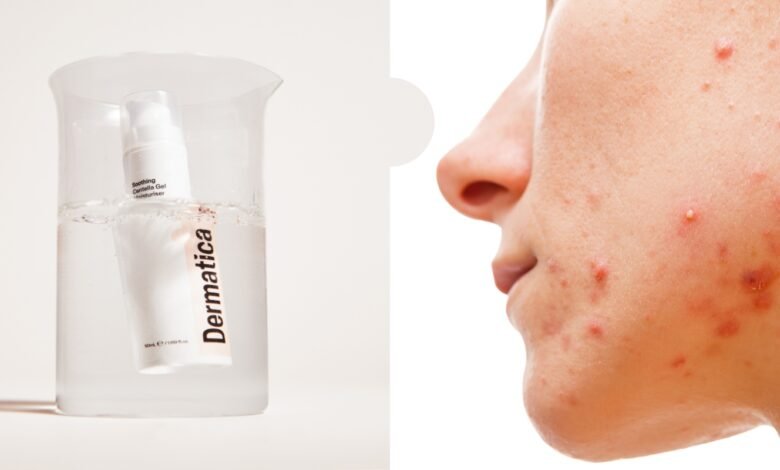
Hormonal acne is driven by androgen fluctuations that increase sebum production, primarily affecting the jawline, chin, and lower cheeks. It affects approximately 50% of women in their 20s and 25% of women in their 40s, according to dermatological research. Unlike teenage acne, it rarely responds to basic cleansers alone — here’s what the evidence shows about effective treatment.
What Causes Hormonal Acne and Why It’s Different from Teenage Breakouts
Hormonal acne is not the same condition you had at 15. Teenage acne is primarily driven by the puberty-related surge in androgens affecting the entire face. Adult hormonal acne involves cyclical hormonal fluctuations that target specific areas — predominantly the lower face and jawline.
The mechanism starts with androgens. According to Bagatin et al. (2019), androgens stimulate sebaceous glands to produce excess sebum. This oil mixes with dead skin cells, creates a plug in the follicle, and provides a breeding ground for Cutibacterium acnes bacteria. The result is deep, inflammatory cysts rather than the surface-level whiteheads typical of adolescent acne.
Key hormonal triggers:
- Menstrual cycle: Breakouts commonly appear 7-10 days before a period when progesterone drops and relative androgen levels rise
- PCOS: Polycystic ovary syndrome causes chronically elevated androgens, affecting up to 10% of UK women according to the NHS
- Perimenopause: Oestrogen decline from the late 30s shifts the hormonal balance toward androgens
- Stress: Cortisol stimulates adrenal androgen production, directly increasing sebum output
- Contraception changes: Starting or stopping the pill disrupts hormonal equilibrium for 3-6 months
Hormonal acne is not caused by poor hygiene. Over-washing actually strips the skin barrier, increases inflammation, and worsens breakouts. The cause is internal, not external.
Which Skincare Ingredients Work for Hormonal Acne
The right skincare routine won’t cure hormonal acne, but it can reduce severity, prevent secondary breakouts, and support medical treatment. The key is targeting inflammation and cell turnover without destroying the skin barrier.
| Ingredient | What It Does | Evidence Level | Best For | Caution |
| Retinoids (retinol, adapalene) | Increases cell turnover, unclogs pores | Strong (gold standard) | All acne types | Start slow, causes purging |
| Niacinamide (B3) | Reduces inflammation, regulates sebum | Good | Oily, inflamed skin | Generally well tolerated |
| Salicylic acid (BHA) | Penetrates pores, dissolves debris | Good | Clogged pores, blackheads | Can dry skin if overused |
| Azelaic acid | Anti-inflammatory, reduces pigmentation | Strong | Hormonal acne + dark marks | Mild tingling initially |
| Benzoyl peroxide | Kills bacteria, reduces inflammation | Strong | Active infected spots | Bleaches fabrics, can irritate |
| Hyaluronic acid | Hydrates without adding oil | Good (supportive) | Maintaining barrier health | Apply to damp skin |
According to the British Association of Dermatologists, a combination of retinoid plus azelaic acid is considered first-line topical therapy for adult female acne. Ayu Cosmetics formulates products with several of these active ingredients, designed to work together without compromising the skin barrier.
Medical Treatments for Moderate to Severe Hormonal Acne
When topical skincare alone isn’t enough — and for most moderate-to-severe hormonal acne, it won’t be — medical intervention targets the hormonal root cause rather than just the symptoms.
According to NHS guidance on acne, GP referral to a dermatologist is recommended when acne doesn’t respond to over-the-counter treatments after 3 months, or when scarring is occurring.
| Treatment | How It Works | Timeline to Results | Suitability | UK Availability |
| Combined pill (e.g., Dianette) | Reduces androgen activity | 3-4 cycles | Women not planning pregnancy | GP prescription |
| Spironolactone | Blocks androgen receptors | 3-6 months | Women with jawline-pattern acne | Dermatologist (off-label) |
| Topical retinoids (Differin) | Unclogs pores, reduces inflammation | 8-12 weeks | Mild-moderate acne | Over the counter or prescription |
| Oral antibiotics | Reduces bacteria and inflammation | 6-8 weeks | Inflammatory acne (short-term) | GP prescription |
| Isotretinoin (Roaccutane) | Shrinks sebaceous glands permanently | 4-6 months course | Severe/resistant acne | Dermatologist only |
Spironolactone is not licensed for acne in the UK, but dermatologists prescribe it off-label for hormonal acne in women with good evidence supporting its use. It works by blocking androgen receptors in the skin, reducing oil production at the source. Most women see significant improvement by month three.
Building a Hormonal Acne Skincare Routine
A stripped-back, barrier-friendly routine works better than a 10-step approach for hormonal acne. More products does not mean better results — it means more potential irritation and more variables to manage.
Morning routine:
- Gentle cleanser (non-foaming, pH 4.5-5.5)
- Niacinamide serum (5-10%)
- Lightweight moisturiser (oil-free, non-comedogenic)
- SPF 30+ (essential — retinoids and azelaic acid increase sun sensitivity)
Evening routine:
- Double cleanse (oil cleanser followed by gentle wash)
- Active treatment: alternate retinoid (3x weekly) with azelaic acid (other nights)
- Moisturiser
What to avoid:
- Physical scrubs and harsh exfoliants — they aggravate inflammation
- Heavy, comedogenic oils (coconut oil is a common culprit)
- Constantly switching products — give ingredients 8-12 weeks before judging
- Picking or squeezing cysts — this pushes infection deeper and guarantees scarring
The best skincare for hormonal acne pairs evidence-based active ingredients with minimal, barrier-supportive formulations. The goal is treating the acne while keeping the surrounding skin healthy enough to heal effectively.
When Hormonal Acne Points to Something Else
Persistent hormonal acne is not always “just acne.” In some cases, breakouts are a visible symptom of an underlying hormonal condition that needs separate treatment.
According to the NHS, you should ask your GP for hormone testing if you experience acne alongside any of these symptoms:
- Irregular or absent periods
- Excess facial or body hair (hirsutism)
- Unexplained weight gain, particularly around the midsection
- Hair thinning at the crown
- Darkening of skin in the neck folds or armpits (acanthosis nigricans)
These combinations may indicate PCOS, late-onset congenital adrenal hyperplasia, or thyroid dysfunction. A basic hormone panel (testosterone, DHEA-S, SHBG, LH/FSH ratio) and thyroid function test can identify or rule out these conditions.
Treating the acne without investigating the underlying cause is treating the symptom, not the problem. If your hormonal acne started suddenly, worsened dramatically, or doesn’t match your menstrual pattern, a blood test is a worthwhile first step.
Frequently Asked Questions
What does hormonal acne look like?
Hormonal acne typically presents as deep, cystic bumps along the jawline, chin, and lower cheeks. It is not the same as the T-zone breakouts common in teenagers. The spots are painful, slow to heal, and more likely to leave post-inflammatory marks than surface-level blemishes.
What triggers hormonal acne in adults?
Androgen fluctuations are the primary trigger — from menstrual cycles, PCOS, perimenopause, stress, or contraception changes. Diet alone is not a primary cause, though high-glycaemic foods and dairy may worsen existing breakouts in some individuals.
Can skincare alone clear hormonal acne?
Skincare manages mild cases and supports medical treatment, but moderate to severe hormonal acne usually requires systemic treatment. A good skincare routine is necessary but rarely sufficient on its own. Retinoids and azelaic acid are the most effective topical options.
How long does it take to treat hormonal acne?
Most treatments take 3-6 months for significant improvement. Topical retinoids need 8-12 weeks. Spironolactone takes 3-6 months. An initial worsening in the first 4-6 weeks is normal with retinoids and is a sign the treatment is working, not failing.
Is hormonal acne the same as adult acne?
Not exactly. Adult acne is a broad category; hormonal acne is a specific subtype driven by androgen fluctuations. Most adult acne in women has a hormonal component, but adult acne can also be triggered by stress, medication, cosmetics, or occupational exposure. The distinction determines the treatment approach.